Noah Schröder · 23 September 2026
Surface Luminance Patterns Shaping Viewer Focus in Expansive Screen Setups
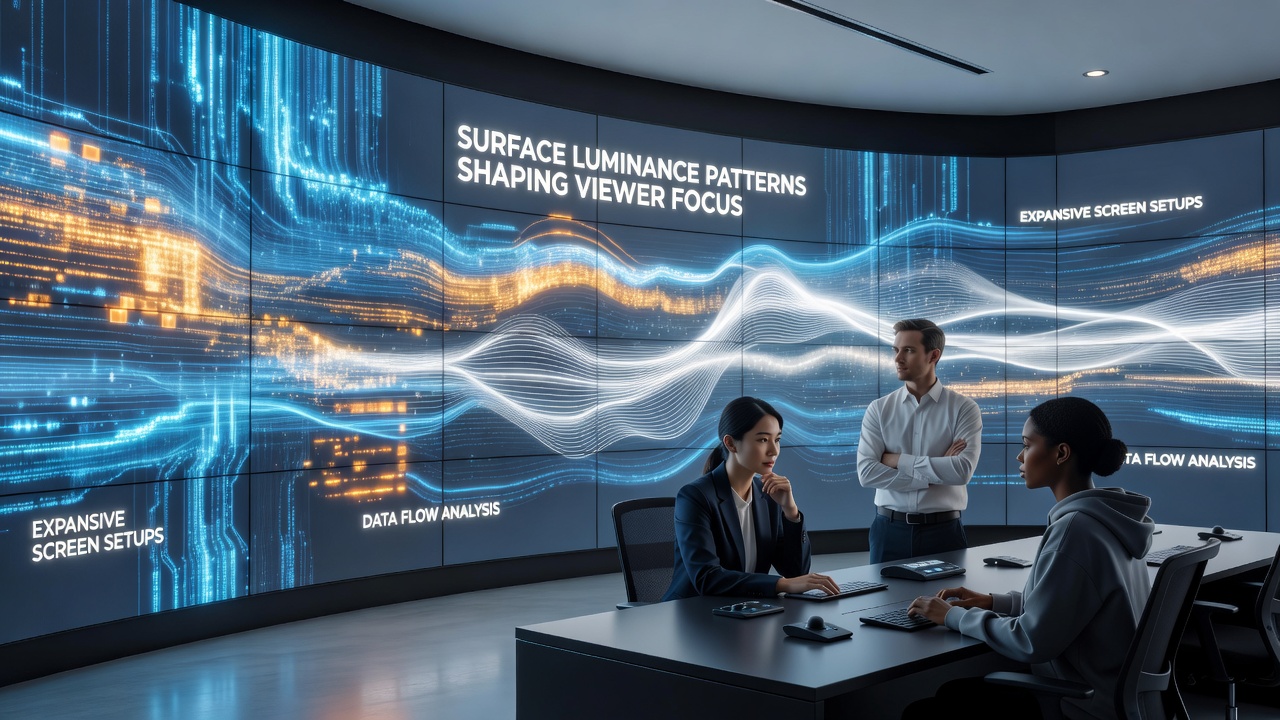
Expansive screen setups rely on surface luminance patterns that direct where viewers look and how long their attention stays on specific areas, and researchers have documented these effects through controlled experiments involving eye-tracking technology in environments ranging from command centers to digital signage arrays. Data from multiple studies show that brighter regions with gradual transitions pull focus more effectively than uniform brightness levels, while sharp contrasts create fixation points that shift rapidly across wide fields of view.
How Luminance Gradients Influence Attention Allocation
Observers note that luminance patterns function as visual anchors because the human visual system responds to differences in light intensity before processing color or detail, and this response occurs within milliseconds according to measurements taken during trials at various research facilities. When screens span several meters, patterns that fade from high to low intensity guide the gaze along intended paths, whereas flat luminance fields allow attention to wander without clear targets. Engineers designing these setups often map luminance values across each panel surface to create intended flow lines, and measurements confirm that viewers spend longer durations on zones where luminance peaks align with content priorities.
Eye-Tracking Evidence from Large-Scale Display Research
Studies conducted at institutions across North America and Europe reveal consistent patterns in how luminance shapes fixation sequences, with participants demonstrating predictable scan paths when brightness gradients lead from one screen section to another. For instance, one investigation tracked 120 individuals viewing a 12-panel video wall and found that high-luminance centers captured initial glances 78 percent of the time, after which lower-luminance surrounds retained secondary attention for extended periods. These findings align with data released in reports from vision research groups that emphasize the role of surface-level light distribution over overall screen size alone.
Additional experiments using multi-monitor configurations in simulation environments demonstrate that luminance edges function as natural dividers, helping viewers segment information without conscious effort, while soft gradients encourage smooth transitions between adjacent displays. When patterns include subtle variations rather than abrupt changes, overall comprehension metrics improve because eyes move without resistance, according to aggregated results from university laboratories in Australia and Canada.
Applications in Control Rooms and Digital Environments
Control room operators working with expansive arrays benefit when luminance patterns emphasize critical data feeds, and facility managers have implemented these designs following guidelines from industry reports that quantify attention retention rates. In broadcast monitoring stations, for example, central high-luminance zones highlight live feeds while peripheral screens maintain lower values that still register peripheral movement without pulling focus away from primary tasks. Retail digital signage networks apply similar principles by varying surface brightness to steer customer attention toward promotional content, with field measurements showing increased dwell times on targeted panels.
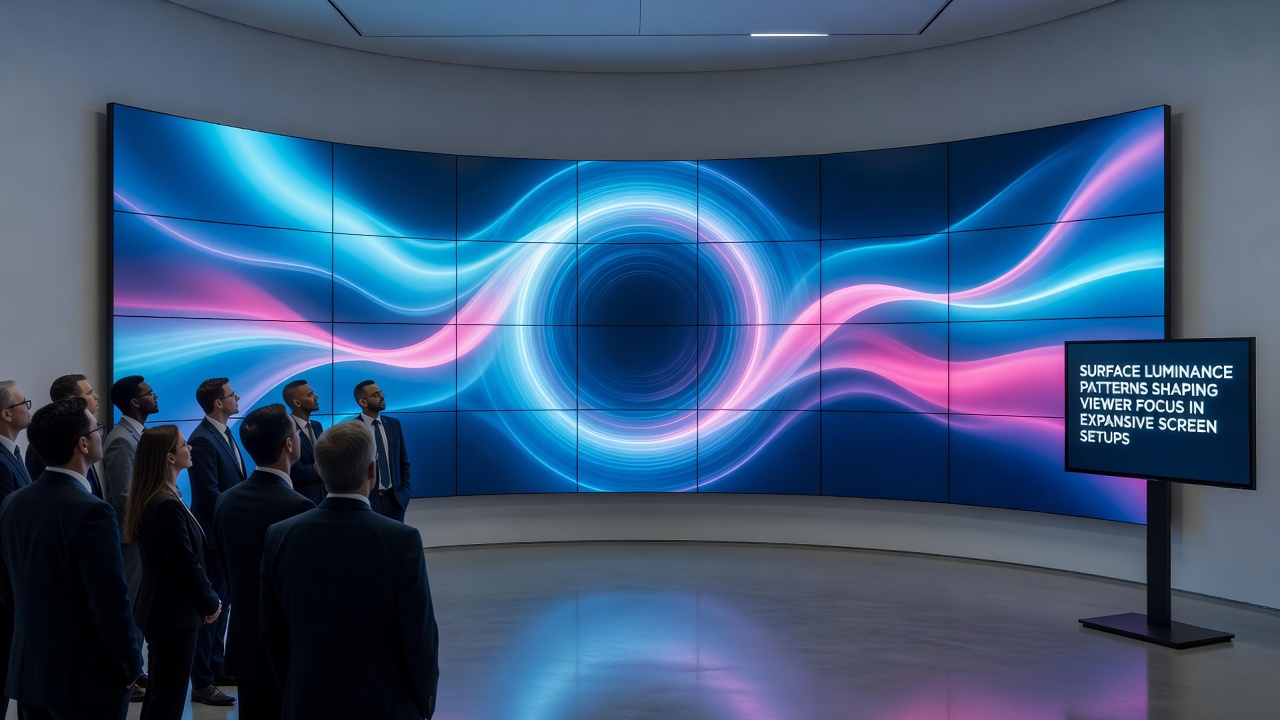
September 2026 brought new datasets from collaborative projects involving display manufacturers and academic teams that refined these approaches for next-generation LED surfaces, and the updates included refined models for predicting how ambient lighting interacts with screen luminance to alter focus patterns. Observers tracking these developments note that integration with real-time sensors now allows dynamic adjustment of surface patterns during operation, maintaining consistent viewer guidance even as surrounding conditions shift.
Technical Considerations for Pattern Implementation
Designers calculate luminance distributions using software that models light falloff across curved or angled screen surfaces, and calibration routines ensure each panel contributes to an overall gradient rather than isolated bright spots. Hardware specifications from leading panel producers specify uniformity tolerances that prevent unintended hotspots, which otherwise disrupt intended attention flows according to validation tests performed at testing facilities. When expansive setups incorporate mixed display technologies, matching luminance curves between different panel types becomes essential to avoid visual breaks that fragment viewer focus.
People working with these systems report that testing under varied viewing angles helps identify pattern adjustments needed to keep focus consistent across an audience, since off-axis positions experience altered brightness perception. Standards bodies in the United States and the European Union have published measurement protocols that quantify these effects, providing benchmarks for engineers to verify that luminance patterns achieve the desired attention direction without causing fatigue from excessive contrast.
Conclusion
Research continues to map the precise relationships between surface luminance patterns and viewer focus in expansive screen environments, with ongoing work examining interactions between pattern complexity, screen curvature, and multi-user scenarios. The accumulated evidence demonstrates that deliberate control of brightness distribution across large surfaces produces measurable shifts in where and how long attention lands, supporting applications across professional, commercial, and entertainment contexts. As display technologies advance, refined pattern strategies will likely incorporate adaptive elements that respond to both content demands and real-time viewer data.